
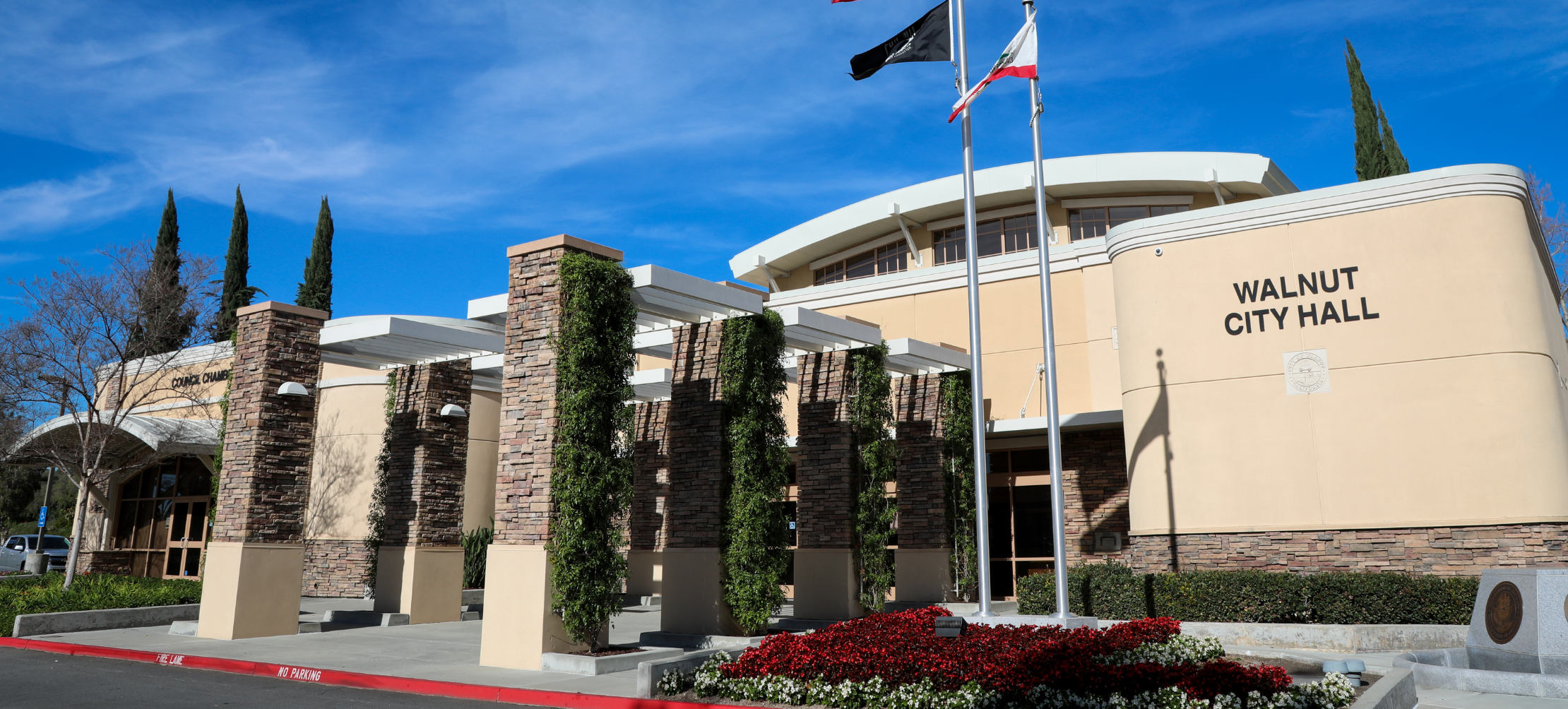
The proposed project involves buildout of the additional housing units needed for the City of Walnut’s 6th Cycle Housing Element (2021–2029) to comply with its Regional Housing Needs Assessment allocation of 1,462 units. The City identified five Study Areas — totaling roughly 46 acres — to accommodate up to 1,462 dwelling units through rezoning from existing industrial and commercial designations to residential.
Ganddini Group prepared a transportation impact analysis and vehicle miles traveled (VMT) analysis in support of the Housing Element’s citywide CEQA review. The study calculated project trip generation for maximum buildout of each Study Area and compared it against maximum buildout under the existing (industrial/commercial) land use designations. The VMT analysis screened the plan against the City’s project-type, low-VMT-area, and transit-priority-area criteria, then used detailed SCAG regional travel demand modeling to evaluate the plan’s Citywide VMT per service population against the City’s adopted significance thresholds.
The study found that converting the Study Areas from industrial and commercial to residential use would actually reduce peak-hour trip generation. While the plan did not qualify for any of the City’s screening exemptions on its own, the detailed VMT modeling found that Citywide VMT per service population would decrease with buildout of the Housing Element compared to the no-project scenario, both in the near term and by 2040, resulting in a less-than-significant VMT impact and consistency with the region’s Sustainable Communities Strategy.
The City of Walnut’s 6th Cycle Housing Element was adopted by the City Council and certified by the California Department of Housing and Community Development in 2022.